
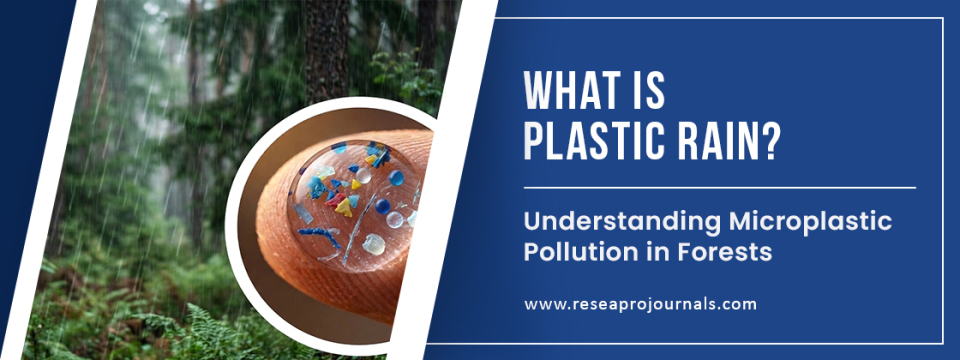
What Is Plastic Rain? Understanding Microplastic Pollution in Forests


Introduction
Plastic pollution is no longer limited to oceans, rivers, and city streets. Scientists are now discovering tiny plastic particles falling from the sky into remote forests, mountains, and protected ecosystems. This alarming phenomenon is known as plastic rain.
Recent environmental studies reveal that microscopic plastic particles travel through the atmosphere and settle in forests through rainfall, snowfall, wind, and dust. Even untouched natural habitats are becoming contaminated by airborne microplastics, raising serious concerns about biodiversity, soil quality, and human health.
But what exactly is plastic rain, and why are researchers calling it a growing environmental crisis?
What Is Plastic Rain and Why Are Scientists Concerned?
Plastic rain refers to the atmospheric deposition of microplastics and nano plastics that fall from the air onto land and water surfaces. These particles are so small that they can be carried long distances by wind currents before eventually settling on forests, agricultural fields, rivers, and oceans.
Microplastics are plastic fragments smaller than 5 millimetres. They originate from sources such as:
- Tire wear from vehicles
- Synthetic clothing fibers
- Plastic packaging waste
- Industrial emissions
- Degraded bottles and containers
- Paint particles and construction materials
Scientists have detected these particles in remote forests, Arctic snow, mountain peaks, and even rainwater. This shows that plastic pollution has become part of the Earth’s atmospheric cycle.
How Does Plastic Rain Reach Forest Ecosystems?
Forests are increasingly becoming collection zones for airborne plastic particles. Trees act like natural filters, trapping tiny plastic fragments on leaves, bark, and soil surfaces.
Airborne Transport of Microplastics
Microplastics become airborne through wind, traffic emissions, industrial activity, and urban dust. Once suspended in the atmosphere, they can travel hundreds or even thousands of kilometres.
Deposition Through Rain and Snow
When rain or snow occurs, these airborne particles are pulled down from the atmosphere and deposited onto forest ecosystems. This process is like how dust or pollen settles after rainfall.
Forest Canopies Trap Plastic Particles
Dense forest canopies capture airborne particles effectively. Over time, plastic fragments accumulate in:
- Soil layers
- Tree bark
- Leaf surfaces
- Streams and rivers within forests
Researchers believe forests may act as long-term reservoirs for microplastic pollution.
What Is the Scientific Mechanism Behind Plastic Rain?
The mechanism of plastic rain involves a combination of atmospheric science, pollution transport, and environmental chemistry.
Step 1: Plastic Breakdown
Large plastic waste breaks down due to:
- Sunlight exposure (UV radiation)
- Heat and weathering
- Mechanical friction
- Ocean and river movement
This creates microscopic particles.
Step 2: Atmospheric Suspension
Tiny particles become light enough to enter the atmosphere through:
- Wind erosion
- Vehicle movement
- Industrial exhaust
- Agricultural activities
Some particles are small enough to remain suspended in the air for extended periods.
Step 3: Long-Distance Atmospheric Movement
Air currents transport microplastics across cities, rural regions, and forests. Scientists have found evidence that these particles can cross continents.
Step 4: Deposition in Forests
Eventually, gravity, rainfall, and snowfall deposit these particles into ecosystems, including remote forests far from urban pollution sources.
Where Has Plastic Rain Been Found Around the World?
Researchers have documented plastic rain in multiple regions across the globe.
European Forests
Studies in remote mountain forests in France detected thousands of microplastic particles settling daily from the atmosphere.
Arctic Regions
Scientists discovered microplastics trapped in Arctic snow, proving that plastic pollution can travel extremely long distances.
National Parks and Protected Areas
Even protected forests and wildlife reserves have shown signs of airborne plastic contamination.
Urban Forests
Forests near cities experience even higher levels of plastic deposition due to nearby industrial and transportation activities.
These findings demonstrate that no ecosystem is completely isolated from global plastic pollution.
How Does Microplastic Pollution Affect Forest Ecosystems?
Microplastics may significantly disrupt forest health and biodiversity.
Soil Contamination
Plastic particles alter soil structure and may affect:
- Water retention
- Nutrient cycling
- Soil microorganisms
Healthy soil bacteria and fungi are essential for forest growth.
Harm to Wildlife
Small animals, insects, and birds may accidentally consume microplastics while feeding. This can lead to:
- Digestive blockages
- Toxic chemical exposure
- Reduced reproductive success
Impact on Plant Growth
Emerging studies suggest microplastics may interfere with root development and nutrient absorption in plants.
Water Pollution in Forest Streams
Rainwater can carry plastic particles into rivers and freshwater ecosystems, affecting aquatic organisms.
Could Plastic Rain Affect Human Health?
Scientists are increasingly concerned about human exposure to airborne microplastics.
People may inhale microscopic plastic particles present in the air. Researchers are currently studying whether long-term exposure could contribute to:
- Respiratory problems
- Inflammation
- Hormonal disruption
- Cardiovascular issues
Microplastics have already been detected in:
- Human blood
- Lung tissue
- Drinking water
- Food products
Although research is ongoing, experts warn that atmospheric plastic pollution could become a major public health concern in the future.
What Are the Main Sources of Atmospheric Microplastics?
Several everyday activities contribute to plastic rain.
Synthetic Textiles
Clothes made from polyester and nylon release tiny fibers during washing and drying.
Vehicle Tires
Tire friction generates microplastic dust that becomes airborne.
Packaging Waste
Single-use plastics break down into smaller fragments over time.
Industrial Emissions
Factories and manufacturing facilities release microscopic particles into the atmosphere.
Urban Dust
Cities contain large amounts of fragmented plastic particles mixed with dust and pollutants.
Can Plastic Rain Be Reduced?
Reducing plastic rain requires global efforts to limit plastic pollution at its source.
Solutions Scientists Recommend
- Reduce single-use plastics
- Improve waste management systems
- Develop biodegradable materials
- Increase plastic recycling efficiency
- Regulate industrial emissions
- Encourage sustainable fashion practices
Governments, industries, and individuals all play a role in minimizing microplastic contamination.
What Does the Future of Microplastic Research Look Like?
Microplastic research is expanding rapidly as scientists attempt to understand the long-term environmental consequences of plastic rain.
Future studies may focus on:
- Measuring global atmospheric plastic cycles
- Understanding health impacts
- Developing microplastic filtration technologies
- Monitoring contamination in remote ecosystems
- Creating eco-friendly plastic alternatives
Researchers believe plastic pollution could become one of the defining environmental challenges of the 21st century.
Plastic rain highlights how deeply plastic pollution has entered the natural world. What was once considered a problem of oceans and landfills is now affecting forests, mountains, and even the atmosphere itself.
As airborne microplastics continue to spread globally, scientists warn that ecosystems, wildlife, and human health could face long-term consequences. Understanding how plastic rain forms and impacts forests is an important step toward developing sustainable solutions for the future.
If you're working on similar research, why not take it further? WithReseapro Journals, you can publish faster and reach a global academic audience. Start yoursubmissiontoday and amplify your research impact.
Reviews & Comments
No reviews yet. Be the first to write one.