
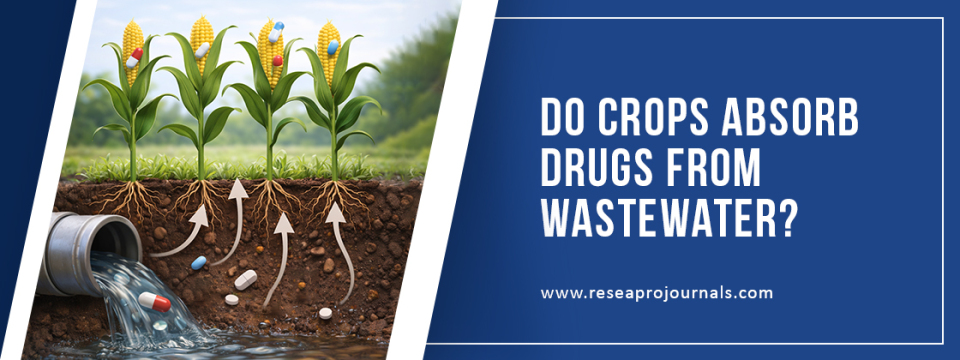
Do Crops Absorb Drugs from Wastewater?


Introduction: Can Wastewater Irrigation Contaminate Our Food?
With growing water scarcity, farmers worldwide are increasingly turning to treated wastewater for irrigation. While this approach supports sustainability, it raises a critical question: Can crops absorb pharmaceutical drugs present in wastewater and if so, does it affect human health?
This blog explores the scientific evidence, mechanisms, and implications of drug uptake in crops, helping you understand both the risks and opportunities.
What Does It Mean for Crops to Absorb Drugs from Wastewater?
Pharmaceutical residues including antibiotics, painkillers, hormones, and antidepressants often enter wastewater systems through human excretion and improper disposal. Even after treatment, trace amounts can remain.
When this water is used for irrigation, crops may absorb these compounds through their roots, a process studied under environmental science and plant physiology. This phenomenon is often referred to as “pharmaceutical uptake in plants.”
Common drugs detected in agricultural systems include:
- Antibiotics (e.g., ciprofloxacin)
- Anti-inflammatory drugs (e.g., ibuprofen)
- Hormones (e.g., estrogen compounds)
- Antidepressants (e.g., fluoxetine)
How Do Crops Absorb Pharmaceutical Compounds from Soil and Water?
Plants absorb water and nutrients from the soil through their roots. If pharmaceutical compounds are present in the soil or irrigation water, they can follow similar pathways.
Key Steps in the Process:
- Root Uptake: Drugs dissolved in water enter plant roots via passive diffusion or active transport.
- Translocation: These compounds move upward through the xylem along with water.
- Accumulation: Some drugs accumulate in edible parts like leaves, fruits, or roots.
The extent of absorption depends on factors like:
- Chemical properties of the drug (solubility, polarity)
- Soil composition and pH
- Plant species and root structure
- Duration of exposure
What Is the Scientific Mechanism Behind Drug Uptake in Plants?
At a molecular level, drug uptake is influenced by processes such as:
- Passive diffusion: Small, non-polar molecules easily cross cell membranes.
- Ion trapping: Some drugs accumulate in plant tissues due to pH differences.
- Binding interactions: Compounds may bind to plant proteins or cell walls.
Scientists often describe this using the concept of bioaccumulation, where substances build up in an organism over time.
Certain plants like leafy vegetables (spinach, lettuce) are more prone to accumulating contaminants due to their high-water content and rapid growth.
Where Has This Been Observed? Real-World Examples
Several studies across the globe have confirmed the presence of pharmaceuticals in crops:
- In parts of Asia, wastewater-irrigated farms showed trace antibiotics in vegetables.
- European studies found ibuprofen residues in lettuce and carrots.
- Research in North America detected antidepressants in leafy greens.
Although concentrations are typically very low (often in nanograms per gram), long-term exposure remains a concern for both ecosystems and human health.
What Are the Benefits and Risks of Using Wastewater in Agriculture?
Benefits
- Conserves freshwater resources
- Provides nutrients like nitrogen and phosphorus
- Supports agriculture in water-scarce regions
- Reduces wastewater discharge into natural bodies
Limitations
· Potential accumulation of pharmaceuticals in food
- Development of antibiotic resistance
- Unknown long-term health effects
- Soil contamination over time
It’s important to note that current evidence suggests most detected levels are below immediate toxicity thresholds, but cumulative exposure is still being studied.
What Does the Future Hold? Safer Solutions and Innovations
Researchers and policymakers are actively working on solutions to minimize risks:
Advanced Treatment Technologies
- Membrane filtration
- Activated carbon adsorption
- Advanced oxidation processes
Agricultural Strategies
- Selecting crops with lower uptake rates
- Controlled irrigation techniques
- Soil amendments to reduce bioavailability
Policy and Regulation
Governments are developing stricter guidelines for wastewater reuse, ensuring safer agricultural practices.
Conclusion: Should We Be Concerned About Drug Uptake in Crops?
Yes, but with perspective. Crops can absorb pharmaceutical residues from wastewater, but the levels are usually very low. The real concern lies in long-term exposure, ecological impact, and antibiotic resistance, rather than immediate toxicity.
With improved treatment technologies and better agricultural practices, wastewater reuse can remain a sustainable solution without compromising food safety.
If you're working on similar research, why not take it further? With Reseapro Journals, you can publish faster and reach a global academic audience. Start your submission today and amplify your research impact.
Reviews & Comments
No reviews yet. Be the first to write one.